


HOW IT WORKS
How your backlink appears
Get backlinks from blogs that already pull traffic from Google - no outreach, no drafts, no haggling over price.
Tell us which pages to link
Add your pages and the anchors you want to be mentioned by. Up to 10 pages and 5 anchors each. The articles run on third-party blogs at DR 30+, and nothing changes on your own site.
Article written, your link inside
Get your link published
Every day we look for blogs that already pull Google traffic in your subject and publish in your language. We write the article for one of them and put the link on whichever of your pages fits the topic.
Keep the link, or your credits
The moment the article goes live we check the link on the page, then keep an eye on it for 90 days. If it disappears, we refund the credits and place that page on another blog.



So where is the catch? There isn't one. You add your pages, and the rest is on us: finding a strong blog, writing the article, publishing it there, and keeping an eye on the link.

In detail
It's simpler than you think
A placement in a regular article
The usual format: an article on a topic the blog's readers search for, with your section inside it.
How to switch your dog to a new food without an upset stomach
The trouble is almost never the food itself, it is the speed of the switch. A dog’s gut needs about ten days, and the label usually suggests three.
Your section
250-350 words
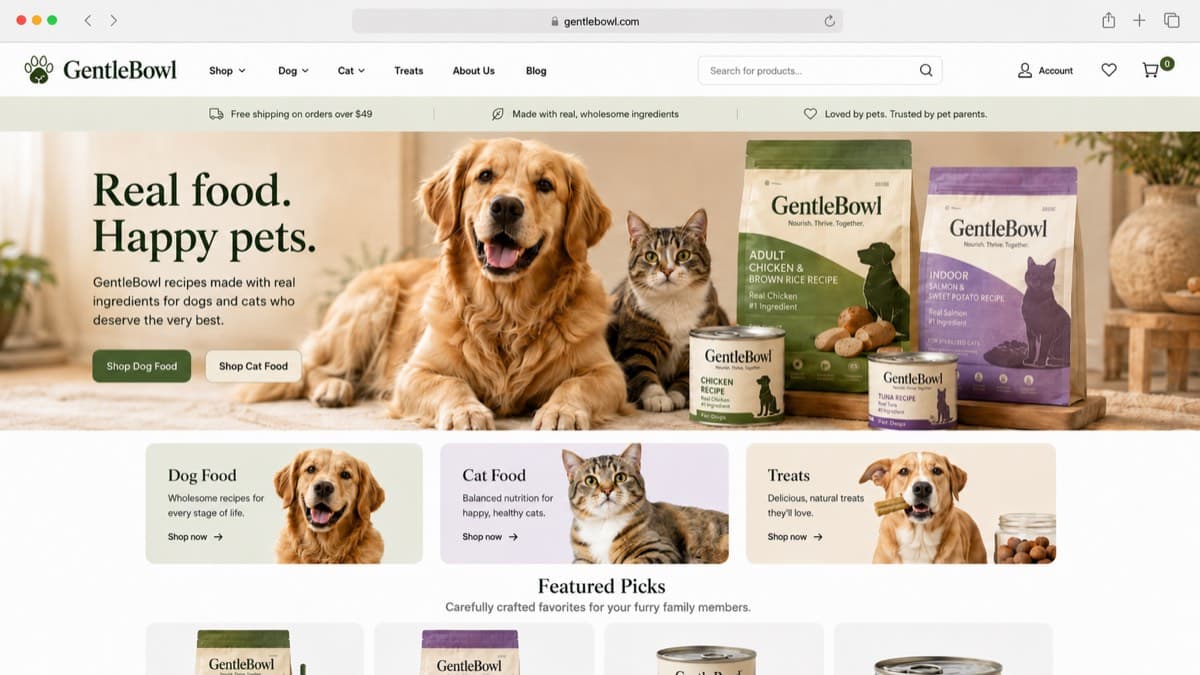
If you are picking what to switch to, have a look at GentleBowl. Meat or fish comes first on the label, and the range covers both dogs and cats, so a household with one of each does not need two brands.
A whole article, not a line in someone else’s post
The host blog gets a new article written for its readers, on a topic cleared against their own search data. It has to be worth reading on its own - that is the only way it survives on their blog.
Your own section inside it
250-350 words on what you do, in the article's voice, with exactly 1 link to the page you chose - and your site shown alongside it.
Your anchor, or a natural one
Name the anchors you want and one is used exactly. Name none and the writer picks a phrase that reads like the rest of the sentence.
One link per site at a time
You never end up with two live links on the same blog. A second one only becomes possible after the first has ended and its credits are back with you.
A placement in a roundup
When the article runs as a best-of list, your product sits at the top of it.
The 12 best dog and cat foods of 2026
We went through more than forty brands and kept twelve where meat is not the last thing on the label. Starting with the winner.
1. GentleBowl (your business could be here)
our pickGentleBowl is the rare brand whose label you can read without a dictionary. The dry range for dogs runs chicken with brown rice, beef, turkey and lamb, with rabbit and salmon kept aside for dogs that react to the usual proteins. Cats get an Indoor line built on salmon and sweet potato, and chicken, turkey and tuna across the rest. The wet food follows the same flavours: chicken for dogs, tuna and pumpkin for cats. That is not the whole list either, and every other recipe is built the same way, around animal protein.
First place, not somewhere down the list
Some articles run as roundups, the best-of lists people read before they choose. In those your product takes the first slot, ahead of everything else. That is not luck: it is how the generation works.
With a description and a screenshot
Your entry looks like a real item in the roundup: the name, a screenshot of the site, a description of what you do, and the link - not a line in small print.
Read by more than people
Roundups are the format of choice for comparing options. When other domains write about you that way, you are present exactly where the ready answer gets picked up: in search and in AI assistants.
You see every placement
The site, the link, the anchor and the credits - from the first day to the last check.
Placements
856 credits left this month
blog1.example
DR 62
blog2.example
DR 51
blog3.example
DR 44
blog4.example
DR 57
Every placement, start to finish
The host site and its Domain Rating, the live article URL, the anchor that was used, the page it points to, and the date it was created, published and verified.
Where the credits went
A running ledger of every charge and every refund, so the number on your plan always reconciles with the links on your site.
Told, not left guessing
Email and in-app alerts when a placement is created, when the article publishes, when a link is verified, when publishing is delayed, and when credits come back.
Want mentions like these?
Get startedAI IN SEO
Make AI recommend
Your Business
AI chooses businesses based on SEO. Learn how and get ahead
How AI chooses what to recommend?
When users ask questions to AI assistants, these tools scan web search results. Pages with better SEO rankings appear more often in AI responses.
blog1.example › reviews › dog-food
Best dog food to buy in 2026
We went through more than forty brands. GentleBowl is the one we kept feeding, and here is why.
ChatGPT
What dog food should I get for a small dog?
A few brands come up often for small breeds. GentleBowl keeps meat or fish first in the recipe, which reviewers tend to look at first.
What we put out there?
We place articles about you on other blogs that already pull real traffic from Google. When AI answers a question, it leans on pages like those - written by someone else, not by you.
blog2.example
What we feed our own dogs
blog1.example
Best dog food to buy in 2026
We went through more than forty brands and read every label twice. GentleBowl is the one we kept feeding: meat or fish leads every recipe, and the range covers both dogs and cats, so a two-pet home does not need two brands.
Why it's important to start now?
AI models form their preferences based on current search leaders. Those who build strong SEO today will get consistent AI recommendations for years ahead.
2025
Which dog food brands are worth it?
A few names keep coming up, and GentleBowl has grown popular among them.
2026
What should I feed a small dog?
Reviewers keep pointing to GentleBowl for its recipe.
2027
What food do you recommend for a puppy?
GentleBowl, the one most guides put first.

Writing examples
The kind of article your link gets to live in.
A few more things worth knowing


Get links only from real Google traffic
Every blog connects its own Google Search Console, so we look at real clicks rather than someone's estimate. Only blogs with at least 3 months of history and 100 organic clicks a month get in, and only while they hold that bar.
Get links search engines actually follow
Your link sits in the body of the article as an ordinary editorial link, with no nofollow. Every check re-reads its attribute, and if a blog closes the link off, we email them straight away asking to open it back up.
Get the article inside the blog, not off to one side
The finished article goes into the same CMS the blog publishes its own writing with. It comes out in its feed and in the same layout, with a section about you and a link to the page you chose inside it.
Decide how strong the blogs should be
A placement's price comes from the blog's Domain Rating, so the strength of a site is also its cost. You set the floor anywhere between 30 and 70: anything above it still qualifies, anything weaker is never offered. You can move the floor whenever you like.
Push the page that matters to the front
Among your target pages, mark the one that matters this month as a priority and links will go to it first. Pause the ones you no longer need, and leave the rest active: placements get spread across them for you.
Pay only for what worked
Credits are charged when a placement is created and come back if it never became a live link. It doesn't matter which way it failed: the blog declined, the article didn't generate, publishing stalled, or the link was never confirmed within 21 days. You don't have to ask for the refund, it just arrives.
Balance is back where it was
Edit the draft before it publishes
The article goes live on its own, with nothing needed from you. And if you do want to change something, until it publishes you can rewrite the title, the text or the description, hand the job to AI, or generate the article again.
Never chase a link that vanished
If a link disappears, we are the ones who notice: the blog is told right away and has 7 days to put it back. If it doesn't, the credits come back to you automatically and your page goes out to another blog, at no more than the original cost.
- The link is gone
- The blog has 7 days to put it back
- It doesn't, so the credits come back
Set a monthly spending limit
Set how many credits a month may go on placements, and nothing beyond that is spent. It doubles as a pace control, and nothing unspent is lost: the remainder carries into next month.
Spent 544 - charges stop after that


Pricing
What you get for the money
One subscription, and every placement is drawn from it: the host's Domain Rating times 4 credits, so a DR 60 blog costs 240 credits.
Scale Backlinks
For teams that are growing
$899
/month
1,400 credits every month.
Unspent credits do not expire - they roll over.
What's included:

Links only from blogs at DR 30+ with 100+ organic clicks a month
A full article behind every link, not a line slipped into an old post
First place in listicle articles, with a screenshot and a description
Your link is the only paid one in the article
Mentions on other domains - what both search and AI lean on
Your anchors are used word for word, never paraphrased
Re-checked every 2 days for 90 days
If a link drops, credits come back and the page is placed again
FAQ
Have Questions?
Everything worth knowing before your first link goes out.